

Start with a usable brief.
- Define fresh-produce supply separately from cooking or catering.
- Describe where produce will be received and how the organisation will handle it.
- Plan products, quantity and packing around the intended use.
- Confirm every delivery and commercial detail before scheduling.
Separate produce supply from programme operations
Start by defining the service boundary. The requirement may include fruit, vegetables or other fresh produce for the organisation’s own kitchen or distribution activity. FPS can review that supply requirement. It does not mean FPS is providing cooked meals, catering, groceries, ration kits, beneficiary management or nutrition-programme design.
Writing this boundary into the brief helps every team understand responsibility. The organisation controls preparation, cooking, serving, onward distribution and programme delivery. The supplier discussion can then remain focused on products, quantity, packing, location, frequency and commercial terms.
- Fresh fruit, vegetables or combined produce requirement
- Organisation’s intended handling after receipt
- Services expressly outside the supply request
- Named contact responsible for the requirement
Avoid using meal, catering or ration-kit language when the actual request is only for fresh produce.
Describe the operating context
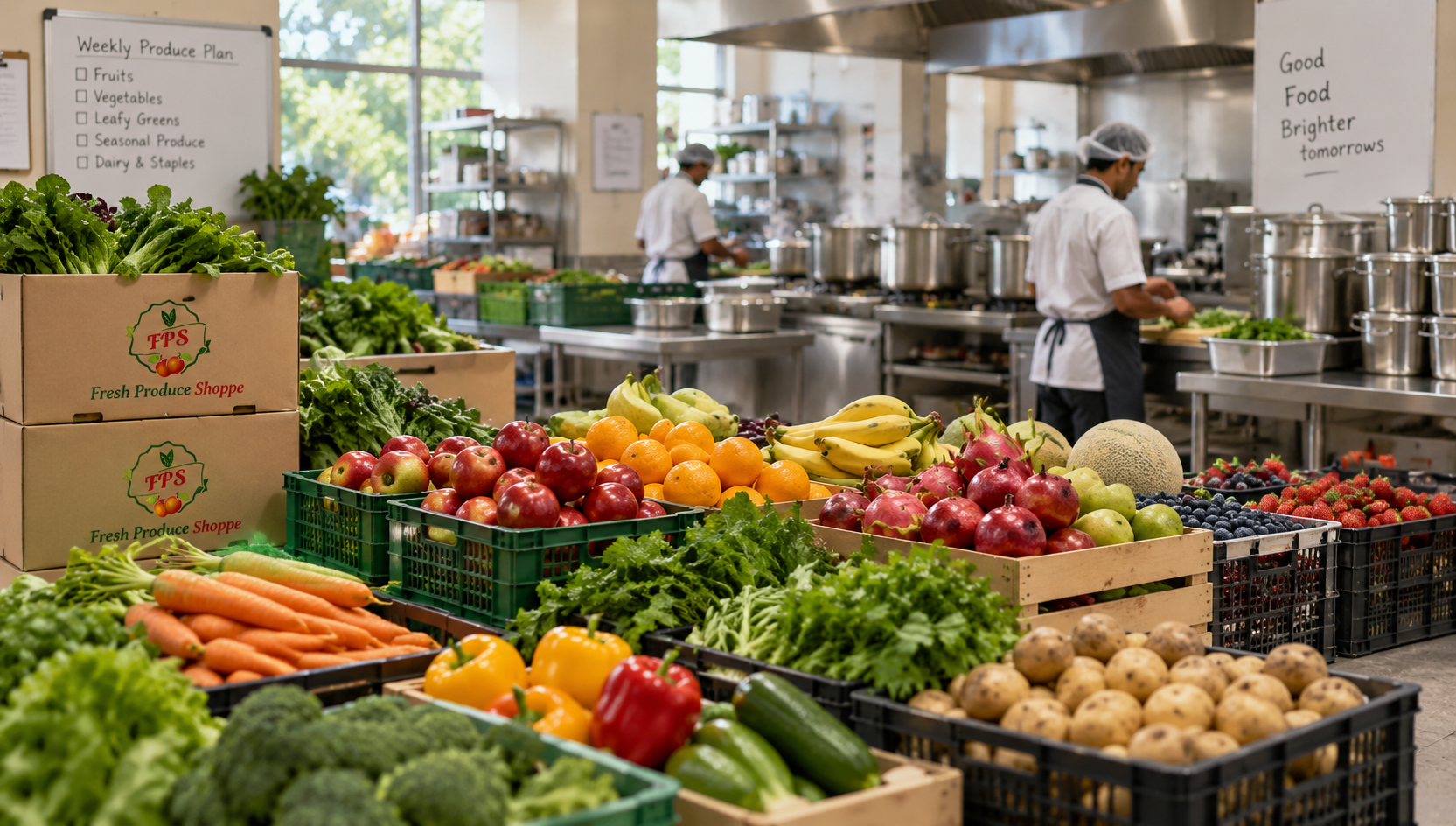
Explain where the produce is going and what happens at handover. A community kitchen may receive produce at its preparation location, while a food-assistance programme may receive it at a staging point for its own onward distribution. These contexts can create different requirements for access, packing and receiving.
Share the complete proposed location, receiving contact and any practical constraints that are known. If multiple sites are involved, list each one. Service availability across Delhi NCR is confirmed for the specific requirement and should not be assumed for an unreviewed location or route.
- Kitchen, staging point or distribution location
- Access and receiving arrangement
- Single or multiple proposed sites
- Organisation’s onward handling plan
The supplier needs to understand the handover point; the organisation remains responsible for what happens after the agreed handover.
Build a produce list around intended use
Identify the fruits and vegetables the organisation wants the supplier to review. Where produce will be used by the organisation’s kitchen, describe relevant product categories and approximate quantities without asking the supplier to design meals. Where fruit will be distributed, explain the preferred products and whether alternatives can be considered.
Domestic & Imported Produce Options and Requirement-Based Assortments may be discussed when relevant. Availability can vary, so distinguish essentials from preferences. The final assortment should be recorded only after it has been reviewed for the stated date, quantity, packing and location.
- Fresh-produce categories required
- Preferred and essential products
- Acceptable alternatives for approval
- Any exclusions the organisation communicates
FPS supplies produce and does not determine menus, portions, dietary suitability or nutritional outcomes.
Estimate quantity and frequency carefully
Connect approximate quantity to the organisation’s own operating plan. For a kitchen, that may relate to its planned procurement requirement. For distribution activity, it may relate to the way the organisation expects to group or hand out produce. Share the basis of the estimate so it can be understood, without presenting it as a verified beneficiary count.
State whether the request is one-time, weekly, monthly or otherwise recurring. Larger-volume fruit and fresh-produce requirements should be discussed with enough detail for feasibility to be reviewed. A recurring conversation should still allow updates when quantity, season, location or programme arrangements change.
- Approximate quantity and how it was framed
- One-time or proposed recurring pattern
- Date by which changes will be communicated
- Contact authorised to confirm the requirement
Do not describe an estimate as guaranteed capacity or confirmed impact. It remains a planning input until the supply is agreed.
Choose packing for handling and onward movement
Describe how the organisation expects to receive, move and use the produce. A grouped format may be relevant for internal kitchen handling; another programme may need a different presentation for its own distribution process. State the practical outcome rather than assuming a specific packaging material or format.
Think through unloading, checking, temporary holding and onward movement. The supplier can review suitable packing options for the requirement, subject to confirmation. The organisation should assign people and space for its receiving process and should not assume that packing includes distribution labour or programme execution.
- Loose, grouped or other format to discuss
- Handover checking process
- Movement after receipt
- Presentation or labelling details requiring review
Confirm packing and any related commercial terms in writing before the supply date.
Confirm the handover and commercial plan
Bring the final information together before scheduling: products or assortment basis, quantity, packing, delivery location, proposed timing, receiving contact and commercial terms. If alternatives are permitted, record who approves them. This gives procurement, operations and receiving teams one dependable reference.
For recurring requirements, review the plan whenever the organisation’s needs change. For a one-time request, ensure the final brief reflects the current location and requirement. FPS can confirm suitable supply options only after reviewing these details; an enquiry or website description is not itself a confirmation of service.
- Final product scope is recorded
- Quantity and packing are agreed
- Location and receiving contact are current
- Schedule and commercial terms are approved
Clear written confirmation protects the practical handover without implying a guarantee beyond the agreed requirement.
A practical confirmation checklist.
- Fresh-produce scope is separate from meal or catering services
- Intended use and handover point are described
- Location and receiving contact are current
- Preferred products and alternatives are identified
- Quantity has a practical basis
- Packing supports the organisation’s handling
- Frequency and change process are stated
- Commercial and supply details are confirmed